Escape Artist
  • Features
    • Interview
    • Expat News
    • Field Notes
    • Trending
  • Your Plan B
    • Finance
    • Real Estate
    • Second Citizenship
    • Digital Nomad
    • Healthcare
  • Destinations
    • Europe
      • France
      • Germany
      • Italy
      • Portugal
      • Scandinavia
      • Spain
      • United Kingdom
      • Rest of Europe
    • Central America
      • Belize
      • Costa Rica
      • El Salvador
      • Guatemala
      • Honduras
      • Nicaragua
      • Panama
    • Others
      • Africa
      • Asia
      • Australia
      • North America
      • South America
      • Middle East
      • Rest of the World
  • Travel Tips
    • Know Before You Go
    • Packing List
    • Food + Culture
    • Health + Wellness
  • Subscribe
Escape Artist
  • Features
    • Interview
    • Expat News
    • Field Notes
    • Trending
  • Your Plan B
    • Finance
    • Real Estate
    • Second Citizenship
    • Digital Nomad
    • Healthcare
  • Destinations
    • Europe
      • France
      • Germany
      • Italy
      • Portugal
      • Scandinavia
      • Spain
      • United Kingdom
      • Rest of Europe
    • Central America
      • Belize
      • Costa Rica
      • El Salvador
      • Guatemala
      • Honduras
      • Nicaragua
      • Panama
    • Others
      • Africa
      • Asia
      • Australia
      • North America
      • South America
      • Middle East
      • Rest of the World
  • Travel Tips
    • Know Before You Go
    • Packing List
    • Food + Culture
    • Health + Wellness
  • Subscribe
👤

THE NUMBER ONE SOURCE FOR BUILDING A LIFE ABROAD

This field is for validation purposes and should be left unchanged.
  • Second Citizenship

A Study in Color: What Your Passport Says About You

  • BY Tyler Sorce
  • May 4, 2018
Total
0
Shares
0
0
0

Passport color…generally relegated to benign observations in airport security lines. I often find myself drawn to the flashes of color that differ from my own U.S. passport – then I spend the next few minutes inconspicuously trying to get a good view of the country name and image. That’s the beauty of travel – people from all over the world brought together for one common goal…movement. Whether for necessity, adventure, or love, no matter who you are, we all end up in the same place…taking our shoes and belts off and walking through that metal threshold. Going from doctor, lawyer, contractor to traveler, if only for a few hours.

All romanticism aside, what do the colors of a passport really mean? The topic has reached a mild level of international interest as Brexit talks have prepared to switch UK passports from their current EU burgundy to their historical pre-1988 dark blue. While thoughts on this switch range from much ado about nothing, to a unifying return to independence, to a detestable display of nationalism, it turns out that the pigment of your passport actually reveals quite a bit about the person who holds it.

SD-IRA

The Fab Four

At present, there are only four base color options for passports around the globe, with shade variances within those categories: Red, Green, Blue, and Black.

Generally, each nation has autonomy to choose the color that they want to represent their citizens on the global landscape. The International Civil Aviation Organization (ICAO) is the governing body that regulates size and format of passports internationally. They determine what specific content is legally required, but the base color and shade within that are non-governed.

Cultural Significance

Each country has a different motivation for why they chose their specific passport color, but many decisions center around political, cultural, or religious rationale.

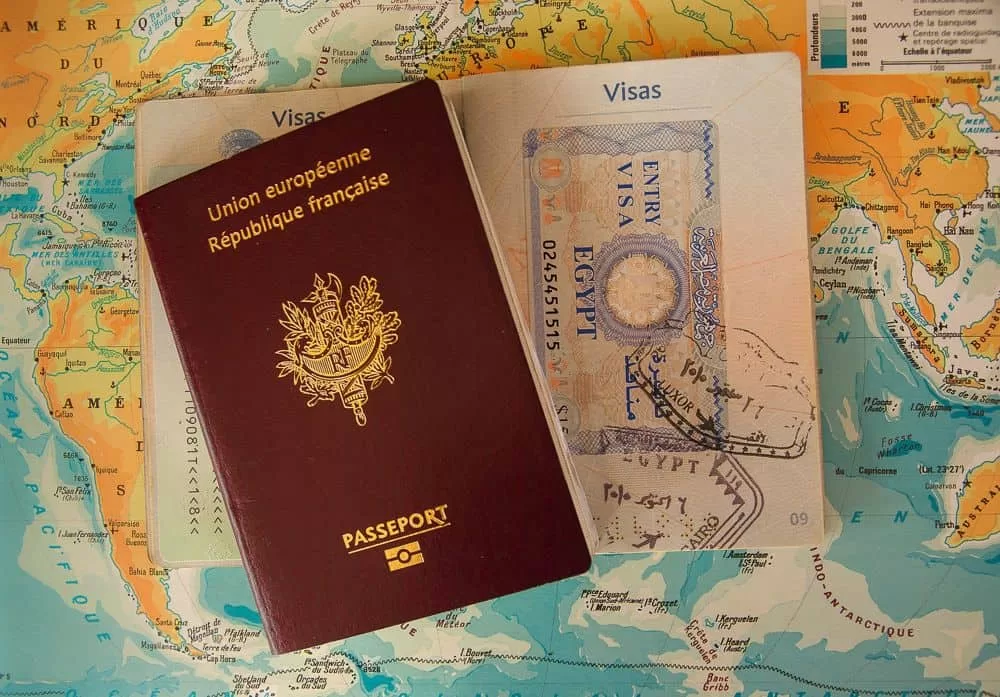
European Union passports are generally all a variant of burgundy or red, thought to be a symbol of unification – and, perhaps, in the eastern region, a nod to a communist past. This is particularly relevant in Slovenia, Serbia, Russia, Latvia, Romania, Poland, and Georgia. Other countries, such as Turkey and Albania, have independently adopted a similar burgundy in hopes of soon being included in the EU embrace.

In contrast, Caribbean nations tend to use blue as a symbolic New World departure from colonialism.

The Andean Community of Nations (Bolivia, Colombia, Ecuador, and Peru) also has burgundy passports, modeling their ambitions on the success of the EU.

Some decisions are more religiously motivated. Many of the muslim-dominant countries use the color green for their passport exterior. In Islam, green is said to have been Muhammad’s favorite color, symbolizing the natural world.

Green is also popular among many West African countries (like Nigeria, the Ivory Coast, and Senegal), particularly those belonging to the Economic Community of West African States (ECOWAS), as a sign of prosperity and solidarity.
Countries with black passports, like India and New Zealand, seem to be more practical with their decisions. Black appears more stately and also minimizes the appearance of dirt and wear-and-tear.

Not Simply a Black or White Issue

While the Brexit decision to revert back to the UK’s traditional, pre-EU blue passport has raised both criticism and praise, passport color fluidity is not uncommon on the global landscape. The United States passport has undergone many transformations in the past hundred years.

The original documents were believed to be red, switching to green briefly in the 30s, followed by burgundy and then black in the early 1970s. The navy color seen today was adopted in 1976, in honor of the blue found in the American flag.

I Got a Guy…

The reason that almost all passports fall into one of the four main color groups is perhaps simply a logistical decision. According to Hrant Boghossian, vice president of the Arton Group which runs the Passport Index, “Passport production is a highly controlled process, and only a few companies around the world are doing it. The cardstock used for passport covers is usually supplied by a third party and only comes in certain colour variations to meet the required standards.”

Author Bio:

Tyler Sorce is an American writer and chef currently based in New York City. He has previously worked in Rome, Paris, and Lisbon, documenting local cuisine and culture through words and photos. Follow his travels and favorite dishes on Instagram.

Want more information about traveling abroad? Contact us below:

Oops! We could not locate your form.

Contact Author

"*" indicates required fields

This field is for validation purposes and should be left unchanged.
Name*
Please let us know what's on your mind. Have a question for us? Ask away.

Stay Ahead on Every Adventure! 

Stay updated with the World News on Escape Artist. Get all the travel news, international destinations, expat living, moving abroad, Lifestyle Tips, and digital nomad opportunities. Your next journey starts here—don’t miss a moment! Subscribe Now!

Passport color…generally relegated to benign observations in airport security lines. I often find myself drawn to the flashes of color that differ from my own U.S. passport – then I spend the next few minutes inconspicuously trying to get a good view of the country name and image. That’s the beauty of travel – people from all over the world brought together for one common goal…movement. Whether for necessity, adventure, or love, no matter who you are, we all end up in the same place…taking our shoes and belts off and walking through that metal threshold. Going from doctor, lawyer, contractor to traveler, if only for a few hours.

All romanticism aside, what do the colors of a passport really mean? The topic has reached a mild level of international interest as Brexit talks have prepared to switch UK passports from their current EU burgundy to their historical pre-1988 dark blue. While thoughts on this switch range from much ado about nothing, to a unifying return to independence, to a detestable display of nationalism, it turns out that the pigment of your passport actually reveals quite a bit about the person who holds it.

The Fab Four

At present, there are only four base color options for passports around the globe, with shade variances within those categories: Red, Green, Blue, and Black.

Generally, each nation has autonomy to choose the color that they want to represent their citizens on the global landscape. The International Civil Aviation Organization (ICAO) is the governing body that regulates size and format of passports internationally. They determine what specific content is legally required, but the base color and shade within that are non-governed.

Cultural Significance

Each country has a different motivation for why they chose their specific passport color, but many decisions center around political, cultural, or religious rationale.

European Union passports are generally all a variant of burgundy or red, thought to be a symbol of unification – and, perhaps, in the eastern region, a nod to a communist past. This is particularly relevant in Slovenia, Serbia, Russia, Latvia, Romania, Poland, and Georgia. Other countries, such as Turkey and Albania, have independently adopted a similar burgundy in hopes of soon being included in the EU embrace.

In contrast, Caribbean nations tend to use blue as a symbolic New World departure from colonialism.

The Andean Community of Nations (Bolivia, Colombia, Ecuador, and Peru) also has burgundy passports, modeling their ambitions on the success of the EU.

Some decisions are more religiously motivated. Many of the muslim-dominant countries use the color green for their passport exterior. In Islam, green is said to have been Muhammad’s favorite color, symbolizing the natural world.

Green is also popular among many West African countries (like Nigeria, the Ivory Coast, and Senegal), particularly those belonging to the Economic Community of West African States (ECOWAS), as a sign of prosperity and solidarity.

Countries with black passports, like India and New Zealand, seem to be more practical with their decisions. Black appears more stately and also minimizes the appearance of dirt and wear-and-tear.

Not Simply a Black or White Issue

While the Brexit decision to revert back to the UK’s traditional, pre-EU blue passport has raised both criticism and praise, passport color fluidity is not uncommon on the global landscape. The United States passport has undergone many transformations in the past hundred years.

The original documents were believed to be red, switching to green briefly in the 30s, followed by burgundy and then black in the early 1970s. The navy color seen today was adopted in 1976, in honor of the blue found in the American flag.

I Got a Guy…

The reason that almost all passports fall into one of the four main color groups is perhaps simply a logistical decision. According to Hrant Boghossian, vice president of the Arton Group which runs the Passport Index, “Passport production is a highly controlled process, and only a few companies around the world are doing it. The cardstock used for passport covers is usually supplied by a third party and only comes in certain colour variations to meet the required standards.”

Author Bio:

Tyler Sorce is an American writer and chef currently based in New York City. He has previously worked in Rome, Paris, and Lisbon, documenting local cuisine and culture through words and photos. Follow his travels and favorite dishes on Instagram.

Want more information about traveling abroad? Contact us below:

Oops! We could not locate your form.

If you'd like to read the full story, simply enter your email to subscribe to our newsletter.

For even more expert insights, unmissable resources, and exclusive invites, explore our premium subscription offers here.

This field is for validation purposes and should be left unchanged.


OR

Subscribe Now

Already a Subscriber? Click here to login

Subscription required

You've reached your limit of free articles. For full access to Escape Artist, and all of our insights on travel, moving abroad, and the digital nomad life, click here to Subscribe.

Already a Subscriber? Log in here
Total
0
Shares
Share 0
Tweet 0
Pin it 0
Previous Article
  • Your Plan B

Best Countries for a Happy Work Life (Part 2)

  • BY Tyler Sorce
  • May 4, 2018
View Post
Next Article
  • Asia

Where Orwell’s 1984 is Real – North Korea

  • BY Jack Wheeler
  • May 4, 2018
View Post
You May Also Like
Two students walking across a university campus at sunset, representing international schooling, higher education, and study abroad opportunities.
View Post
  • Second Residency
Raising Global Kids Without Breaking the Bank
  • BY EA Editorial Staff
  • April 22, 2026
Aerial view of a coastal Portuguese city with hotels, residential buildings, mountains, and the Atlantic shoreline stretching into the distance
View Post
  • Golden Visa
Exploring Currency Considerations for Portugal’s Golden Visa
  • BY Iva Slavtcheva
  • April 15, 2026
Two passports including a blue Cuban passport and a Canadian passport held together, representing international travel and dual citizenship documentation
View Post
  • Second Residency
The Ancestral Hedge for a Second Passport
  • BY EA Editorial Staff
  • April 8, 2026
Happy asian family that enjoys beach activities during the summer holidays. parent and children enjoy the sunset sea on beach.Holiday travel concept, Summer vacations.
View Post
  • Relocation
Why Families Are No Longer Raising Children in One Place
  • BY Isha Sesay
  • April 3, 2026
Overlooking modern red three-dimensional buildings and flying planes, taken in the Library Park of Quanzhou City, Fujian Province, China
View Post
  • Second Residency
How to Leave a Country Without Losing Your Wealth
  • BY EA Editorial Staff
  • March 25, 2026
Aerial view a woman gazing out over the ocean along the shoreline of Shoal Bay Beach with crashing waves and palm trees on the island of Anguilla.
View Post
  • Plan B
The Rise of the Plan B Portfolio
  • BY Luigi Wewege
  • March 25, 2026
Assessing Stability Before You Relocate
View Post
  • Relocation
The Stability Test: What to Check Before You Relocate
  • BY EA Editorial Staff
  • February 18, 2026
Remote worker with laptop and tablet at outdoor garden desk showing digital nomad lifestyle and location independence for global professionals seeking residency
View Post
  • Second Citizenship
10 Digital Nomad Havens Offering a Path to Citizenship
  • BY Isha Sesay
  • February 17, 2026
Trending Posts
  • Panama City skyline at night with illuminated towers, coastal boulevard, and light trails running along the waterfront 1
    • Plan B
    Ready to Leave the US? These Countries Might Trump the American Dream
    • April 20, 2026
  • Two people sitting on a beach at sunset with waves rolling in and rocky coastline silhouetted against the golden sky 2
    • Costa Rica
    Why Some Expats Leave Costa Rica (and Others Stay Forever)
    • April 17, 2026
  • Aerial view of a coastal Portuguese city with hotels, residential buildings, mountains, and the Atlantic shoreline stretching into the distance 3
    • Golden Visa
    Exploring Currency Considerations for Portugal’s Golden Visa
    • April 15, 2026
  • Woman walking down a narrow street in Havana lined with weathered pastel buildings beneath a bright blue sky 4
    • Cuba
    The Reality Behind Cuba’s Romance
    • April 13, 2026
  • Chess pieces on a board overlaid with financial charts and data visualizations representing strategic financial planning 5
    • Finance
    Building a Resilient Banking Strategy for Life Abroad
    • April 22, 2026
Subscribe
Know Before You Go
  • People enjoying the summer at the beach at Lake Ohrid in North Macedonia 1
    • Europe
    Inside North Macedonia: Europe’s Most Unexpected Reinvention
    • April 24, 2026
  • Panama City skyline at night with illuminated towers, coastal boulevard, and light trails running along the waterfront 2
    • Plan B
    Ready to Leave the US? These Countries Might Trump the American Dream
    • April 20, 2026
  • Two people sitting on a beach at sunset with waves rolling in and rocky coastline silhouetted against the golden sky 3
    • Costa Rica
    Why Some Expats Leave Costa Rica (and Others Stay Forever)
    • April 17, 2026
  • Woman walking barefoot along a beach in the Philippines with boats, waterfront buildings, and lush limestone hills in the background 4
    • Digital Nomad
    A Digital Nomad’s Complete Guide to the Philippines
    • April 10, 2026
  • Sunlit view of Valencia, Spain, featuring ornate historic buildings along a palm-lined street, with pedestrians and light traffic under a clear blue sky. 5
    • Spain
    Why Valencia Is on Everyone’s Radar
    • April 7, 2026
Learn More
  • About Us
  • Contact
  • Advertise
  • Subscribe
  • Shop
Why Subscribe

The newly imagined Escape Artist brings you fresh content with a global focus, and sharp, up-to-the-minute coverage of the joys, challenges, and opportunities of life abroad.

For a limited time, we’re offering a special discount on all subscription deals, so be sure to lock-in these incredible savings and start receiving top-notch travel and expat content today!

Sign up for the EA Newsletter

Get important news delivered directly to your inbox and stay connected!

This field is for validation purposes and should be left unchanged.
Escape Artist
  • Terms & Conditions
  • Privacy Policy
  • Cookies Policy
  • Disclaimer

Input your search keywords and press Enter.

Escape Artist

The Newsletter for a
Life Beyond Borders

Practical insights and real stories for those building a life abroad, trusted by 75,000 readers worldwide.

This field is for validation purposes and should be left unchanged.

Before you go, want $50 off your Summit registration?

Subscribe, and get $50 discount code for Plan B Summit registration.

Download Your Free Guide

Fill out the form below to get instant access to your guide + receive a $50 discount code for Plan B Summit 2026!

Download Your Free Guide

Fill out the form below to get instant access to your guide + receive a $50 discount code for Plan B Summit 2026!

Download Your Free Guide

Fill out the form below to get instant access to your guide + receive a $50 discount code for Plan B Summit 2026!

Newsletter Subscription