Escape Artist
  • Features
    • Interview
    • Expat News
    • Field Notes
    • Trending
  • Your Plan B
    • Finance
    • Real Estate
    • Second Citizenship
    • Digital Nomad
    • Healthcare
  • Destinations
    • Europe
      • France
      • Germany
      • Italy
      • Portugal
      • Scandinavia
      • Spain
      • United Kingdom
      • Rest of Europe
    • Central America
      • Belize
      • Costa Rica
      • El Salvador
      • Guatemala
      • Honduras
      • Nicaragua
      • Panama
    • Others
      • Africa
      • Asia
      • Australia
      • North America
      • South America
      • Middle East
      • Rest of the World
  • Travel Tips
    • Know Before You Go
    • Packing List
    • Food + Culture
    • Health + Wellness
  • Subscribe
Escape Artist
  • Features
    • Interview
    • Expat News
    • Field Notes
    • Trending
  • Your Plan B
    • Finance
    • Real Estate
    • Second Citizenship
    • Digital Nomad
    • Healthcare
  • Destinations
    • Europe
      • France
      • Germany
      • Italy
      • Portugal
      • Scandinavia
      • Spain
      • United Kingdom
      • Rest of Europe
    • Central America
      • Belize
      • Costa Rica
      • El Salvador
      • Guatemala
      • Honduras
      • Nicaragua
      • Panama
    • Others
      • Africa
      • Asia
      • Australia
      • North America
      • South America
      • Middle East
      • Rest of the World
  • Travel Tips
    • Know Before You Go
    • Packing List
    • Food + Culture
    • Health + Wellness
  • Subscribe
👤

THE NUMBER ONE SOURCE FOR BUILDING A LIFE ABROAD

This field is for validation purposes and should be left unchanged.
  • Your Plan B

Paris in a Nutshell

  • BY Don Halbert
  • February 9, 2014
Total
0
Shares
0
0
0

Central Paris, with a population of 2.1 million people (2005 statistics), has a very small area of just under 100 square kilometers. No corner is farther than six miles from the square in front of Notre-Dame Cathedral. Therefore, it is possible to cover Paris completely by foot, if desired. The most visited city in the world has a fascinating, romantic 2,000 year history; no wonder every visitor finds something that resonates deeply within them.

Paris has an excellent, reliable, inexpensive, user-friendly and safe public transportation system. Driving a car or motorbike or scooter for tourists is definitely not recommended, unless you have an unfulfilled desire to be a NASCAR racer and are willing to take on all the risks that come with that! In Paris, drivers zip crazily around the city, motorcycles and scooters weave at top speed between cars, driving rules are sketchy and parking is extremely difficult. Visitors usually never have the need to venture outside of Central Paris to the banlieue (suburbs), with a population of over 10 million, however, transportation is plentiful should the need arise.

The currency in France is the Euro, indicated by the € symbol (for example, 10 €), and all prices on goods, services and at restaurants include taxes. What you see for anything is what you pay. Tips at cafés and restaurants are almost always included, although a small amount of a few euros could be left, if desired, for excellent service. Check your currency exchange rate before you arrive.

Paris is a modern, bustling city, with up-to-date and high-tech systems, yet is filled with medieval charm and ways that are steeped in rich history. Some laws and practices date back centuries, therefore some quirky things about Paris and how it operates are puzzling to newcomers; indeed, to the French also!

Paris was at one time a walled city and is comprised of 20 arrondissements that spiral out from the centre (see the map here). The escargot-shaped Paris is split into the Right Bank (Rive Droit) and Left Bank (Rive Gauche) by the River Seine. It is easy to recognize which arrondissement an address is located in by the postal code, which consists of five numbers and starts with ’75.’ For example, an address in 75018 is in the 18th arrondissement, 75005 is in the 5th and so on. Each of these districts is vastly unique and has a different ‘feel’ to them, giving the city one of its nicknames – City of a Hundred Villages.

Paris has retained many of its mom and pop shops, and therefore is sprinkled with small bakeries, cheese, chocolate, wine, meat, fish and vegetable shops, and dozens of street markets happening on any given day of the week, such as the Bastille and Poncelet markets. For this reason, Paris shops, stores and markets have bizarre and varied opening and closing times. Many stores/restaurants still observe old-world customs by closing for two or three hours around lunchtime.

Paris is a multi-cultural city with a strong North African/Arabic influence, which sprinklesdelightfully throughout the markets, restaurants/food, fashion and other cultural endeavors. Parisians can be seen dining on exotic fare such as cous-cous and tagine, Thai, Chinese, Vietnamese, African and all kinds of cuisine from around the world. Asian gastronomy abounds in the 13th arrondissement and Belleville; Jewish in the Marais; African and the West Indies in Chateau-Rouge; Moroccan in Ménilmontant; and Indian in the area around Passage Brady.

Generally speaking, European cities are safer than North American ones, and this holds true for Paris. Despite the media’s highly blown-out-of-proportion publicity about riots, these events mainly take place outside of central Paris in the poor suburbs, where few tourists venture. Paris’ leaders have built huge, wide avenues for groups to march down, as well as massive monuments to gather at. So, the French march and protest and go on strike and probably always will. These manifs are considered normal and everyone joins in. They are for the most part, peaceful.

The main differences between European cities and American ones can be generalized as follows: in Central Paris there is generally speaking very little ‘gang’ mentality (the French are highly individualistic people); no groups of troubled youth riding around in cars looking for trouble (they don’t have cars), no guns being toted by individuals, illegal drug-usage is much lower and there is very little property crime (it is very difficult to penetrate most Parisian buildings which were built like impenetrable fortresses)! Most windows in apartments and hotels have heavy shutters that close completely over them, keeping out noise and intruders!
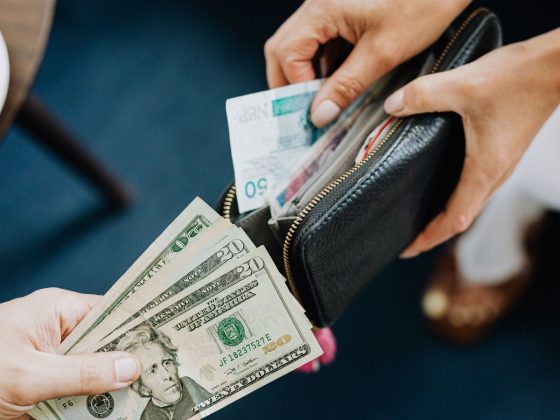
Pick-pocketing is the most common crime occurrence in Paris, and is very easy to shield yourself from. This means carrying an over-the-shoulder bag; no wallets in back or easy to get into pockets; no flagrant flashing of money while paying for things; no fumbling for metro tickets with wide-open purses. Don’t place your phone or Palm on table tops while at cafés or dining. Don’t hang your purse over the back of a chair. Use common sense and simply don’t give pick-pocketers opportunities to snitch your phone, wallet or purse.

Women may have to ward off the persistent attentions of ‘drageurs,’ local men who profess their undying love to foreigners. These men are more annoying than they are a danger. The best way to deal with them is to simply ignore them, don’t talk to them or look at them. Pretend they don’t exist and they’ll soon move onto greener pastures.

Excerpted and adapted from the ebook “Insider Paris Guide for Practical Paris: Everything You Need to Know About Paris But Didn’t Know to Ask!” by Karen Henrich.

Contact Author

"*" indicates required fields

This field is for validation purposes and should be left unchanged.
Name*
Please let us know what's on your mind. Have a question for us? Ask away.

Stay Ahead on Every Adventure! 

Stay updated with the World News on Escape Artist. Get all the travel news, international destinations, expat living, moving abroad, Lifestyle Tips, and digital nomad opportunities. Your next journey starts here—don’t miss a moment! Subscribe Now!

Central Paris, with a population of 2.1 million people (2005 statistics), has a very small area of just under 100 square kilometers. No corner is farther than six miles from the square in front of Notre-Dame Cathedral. Therefore, it is possible to cover Paris completely by foot, if desired. The most visited city in the world has a fascinating, romantic 2,000 year history; no wonder every visitor finds something that resonates deeply within them.

Paris has an excellent, reliable, inexpensive, user-friendly and safe public transportation system. Driving a car or motorbike or scooter for tourists is definitely not recommended, unless you have an unfulfilled desire to be a NASCAR racer and are willing to take on all the risks that come with that! In Paris, drivers zip crazily around the city, motorcycles and scooters weave at top speed between cars, driving rules are sketchy and parking is extremely difficult. Visitors usually never have the need to venture outside of Central Paris to the banlieue (suburbs), with a population of over 10 million, however, transportation is plentiful should the need arise.

The currency in France is the Euro, indicated by the € symbol (for example, 10 €), and all prices on goods, services and at restaurants include taxes. What you see for anything is what you pay. Tips at cafés and restaurants are almost always included, although a small amount of a few euros could be left, if desired, for excellent service. Check your currency exchange rate before you arrive.

Paris is a modern, bustling city, with up-to-date and high-tech systems, yet is filled with medieval charm and ways that are steeped in rich history. Some laws and practices date back centuries, therefore some quirky things about Paris and how it operates are puzzling to newcomers; indeed, to the French also!

Paris was at one time a walled city and is comprised of 20 arrondissements that spiral out from the centre (see the map here). The escargot-shaped Paris is split into the Right Bank (Rive Droit) and Left Bank (Rive Gauche) by the River Seine. It is easy to recognize which arrondissement an address is located in by the postal code, which consists of five numbers and starts with ’75.’ For example, an address in 75018 is in the 18th arrondissement, 75005 is in the 5th and so on. Each of these districts is vastly unique and has a different ‘feel’ to them, giving the city one of its nicknames – City of a Hundred Villages.

Paris has retained many of its mom and pop shops, and therefore is sprinkled with small bakeries, cheese, chocolate, wine, meat, fish and vegetable shops, and dozens of street markets happening on any given day of the week, such as the Bastille and Poncelet markets. For this reason, Paris shops, stores and markets have bizarre and varied opening and closing times. Many stores/restaurants still observe old-world customs by closing for two or three hours around lunchtime.

Paris is a multi-cultural city with a strong North African/Arabic influence, which sprinklesdelightfully throughout the markets, restaurants/food, fashion and other cultural endeavors. Parisians can be seen dining on exotic fare such as cous-cous and tagine, Thai, Chinese, Vietnamese, African and all kinds of cuisine from around the world. Asian gastronomy abounds in the 13th arrondissement and Belleville; Jewish in the Marais; African and the West Indies in Chateau-Rouge; Moroccan in Ménilmontant; and Indian in the area around Passage Brady.

Generally speaking, European cities are safer than North American ones, and this holds true for Paris. Despite the media’s highly blown-out-of-proportion publicity about riots, these events mainly take place outside of central Paris in the poor suburbs, where few tourists venture. Paris’ leaders have built huge, wide avenues for groups to march down, as well as massive monuments to gather at. So, the French march and protest and go on strike and probably always will. These manifs are considered normal and everyone joins in. They are for the most part, peaceful.

The main differences between European cities and American ones can be generalized as follows: in Central Paris there is generally speaking very little ‘gang’ mentality (the French are highly individualistic people); no groups of troubled youth riding around in cars looking for trouble (they don’t have cars), no guns being toted by individuals, illegal drug-usage is much lower and there is very little property crime (it is very difficult to penetrate most Parisian buildings which were built like impenetrable fortresses)! Most windows in apartments and hotels have heavy shutters that close completely over them, keeping out noise and intruders!

Pick-pocketing is the most common crime occurrence in Paris, and is very easy to shield yourself from. This means carrying an over-the-shoulder bag; no wallets in back or easy to get into pockets; no flagrant flashing of money while paying for things; no fumbling for metro tickets with wide-open purses. Don’t place your phone or Palm on table tops while at cafés or dining. Don’t hang your purse over the back of a chair. Use common sense and simply don’t give pick-pocketers opportunities to snitch your phone, wallet or purse.

Women may have to ward off the persistent attentions of ‘drageurs,’ local men who profess their undying love to foreigners. These men are more annoying than they are a danger. The best way to deal with them is to simply ignore them, don’t talk to them or look at them. Pretend they don’t exist and they’ll soon move onto greener pastures.

Excerpted and adapted from the ebook “Insider Paris Guide for Practical Paris: Everything You Need to Know About Paris But Didn’t Know to Ask!” by Karen Henrich.

Contact Author

"*" indicates required fields

If you'd like to read the full story, simply enter your email to subscribe to our newsletter.

For even more expert insights, unmissable resources, and exclusive invites, explore our premium subscription offers here.

This field is for validation purposes and should be left unchanged.


OR

Subscribe Now

Already a Subscriber? Click here to login

Subscription required

You've reached your limit of free articles. For full access to Escape Artist, and all of our insights on travel, moving abroad, and the digital nomad life, click here to Subscribe.

Already a Subscriber? Log in here
Total
0
Shares
Share 0
Tweet 0
Pin it 0
Related Topics
  • cultural differences
  • currency
  • local culture
  • local history
  • local transportation
  • Paris
  • safety and security
  • shopping
Previous Article
  • Real Estate

Good Locations to Buy Property in Argentina

  • BY Don Halbert
  • February 9, 2014
View Post
Next Article
  • Nicaragua

Nicaragua: Trouble in Paradise

  • BY Don Halbert
  • February 9, 2014
View Post
You May Also Like
Panama City View from Ancon Hill, Panama
View Post
  • Panama
From Nomads to Pensionados: Why We Chose Panama As Our New Home
  • BY Nancy Birnbaum
  • May 1, 2026
How to Secure Hungarian Citizenship Yourself Step-by-Step Guide
View Post
  • Second Citizenship
DIY How to Secure Hungarian Citizenship Yourself
  • BY Ethan Cohen & Learn Hungarian Anywhere
  • April 29, 2026
Magnifying glass focused on Estonia and the Baltic region on a printed map of Northern and Eastern Europe.
View Post
  • Second Citizenship
Estonia’s e-Residency and a New Kind of Nation
  • BY Ethan Rooney
  • April 29, 2026
Children touching bananas in the tropical climate of Costa Rica
View Post
  • Costa Rica
Is Costa Rica the Fresh Start Your Family Is Looking For?
  • BY Carla Rodrigues
  • April 27, 2026
Chess pieces on a board overlaid with financial charts and data visualizations representing strategic financial planning
View Post
  • Finance
Building a Resilient Banking Strategy for Life Abroad
  • BY Isha Sesay
  • April 22, 2026
Two students walking across a university campus at sunset, representing international schooling, higher education, and study abroad opportunities.
View Post
  • Your Plan B
Raising Global Kids Without Breaking the Bank
  • BY EA Editorial Staff
  • April 22, 2026
Panama City skyline at night with illuminated towers, coastal boulevard, and light trails running along the waterfront
View Post
  • Plan B
Ready to Leave the US? These Countries Might Trump the American Dream
  • BY Emily Draper
  • April 20, 2026
Aerial view of a coastal Portuguese city with hotels, residential buildings, mountains, and the Atlantic shoreline stretching into the distance
View Post
  • Golden Visa
Exploring Currency Considerations for Portugal’s Golden Visa
  • BY Iva Slavtcheva
  • April 15, 2026
Trending Posts
  • Panama City skyline at night with illuminated towers, coastal boulevard, and light trails running along the waterfront 1
    • Plan B
    Ready to Leave the US? These Countries Might Trump the American Dream
    • April 20, 2026
  • Chess pieces on a board overlaid with financial charts and data visualizations representing strategic financial planning 2
    • Finance
    Building a Resilient Banking Strategy for Life Abroad
    • April 22, 2026
  • People enjoying the summer at the beach at Lake Ohrid in North Macedonia 3
    • Europe
    Inside North Macedonia: Europe’s Most Unexpected Reinvention
    • April 24, 2026
  • Panama City View from Ancon Hill, Panama 4
    • Panama
    From Nomads to Pensionados: Why We Chose Panama As Our New Home
    • May 1, 2026
  • Children touching bananas in the tropical climate of Costa Rica 5
    • Costa Rica
    Is Costa Rica the Fresh Start Your Family Is Looking For?
    • April 27, 2026
Advertise
Know Before You Go
  • How to Secure Hungarian Citizenship Yourself Step-by-Step Guide 1
    • Second Citizenship
    DIY How to Secure Hungarian Citizenship Yourself
    • April 29, 2026
  • Children touching bananas in the tropical climate of Costa Rica 2
    • Costa Rica
    Is Costa Rica the Fresh Start Your Family Is Looking For?
    • April 27, 2026
  • People enjoying the summer at the beach at Lake Ohrid in North Macedonia 3
    • Europe
    Inside North Macedonia: Europe’s Most Unexpected Reinvention
    • April 24, 2026
  • Panama City skyline at night with illuminated towers, coastal boulevard, and light trails running along the waterfront 4
    • Plan B
    Ready to Leave the US? These Countries Might Trump the American Dream
    • April 20, 2026
  • Two people sitting on a beach at sunset with waves rolling in and rocky coastline silhouetted against the golden sky 5
    • Costa Rica
    Why Some Expats Leave Costa Rica (and Others Stay Forever)
    • April 17, 2026
Learn More
  • About Us
  • Contact
  • Advertise
  • Subscribe
  • Shop
Why Subscribe

The newly imagined Escape Artist brings you fresh content with a global focus, and sharp, up-to-the-minute coverage of the joys, challenges, and opportunities of life abroad.

For a limited time, we’re offering a special discount on all subscription deals, so be sure to lock-in these incredible savings and start receiving top-notch travel and expat content today!

Sign up for the EA Newsletter

Get important news delivered directly to your inbox and stay connected!

This field is for validation purposes and should be left unchanged.
Escape Artist
  • Terms & Conditions
  • Privacy Policy
  • Cookies Policy
  • Disclaimer

Input your search keywords and press Enter.

Escape Artist

The Newsletter for a
Life Beyond Borders

Practical insights and real stories for those building a life abroad, trusted by 75,000 readers worldwide.

This field is for validation purposes and should be left unchanged.

Before you go, want $50 off your Summit registration?

Subscribe, and get $50 discount code for Plan B Summit registration.

Download Your Free Guide

Fill out the form below to get instant access to your guide + receive a $50 discount code for Plan B Summit 2026!

Download Your Free Guide

Fill out the form below to get instant access to your guide + receive a $50 discount code for Plan B Summit 2026!

Download Your Free Guide

Fill out the form below to get instant access to your guide + receive a $50 discount code for Plan B Summit 2026!

Newsletter Subscription